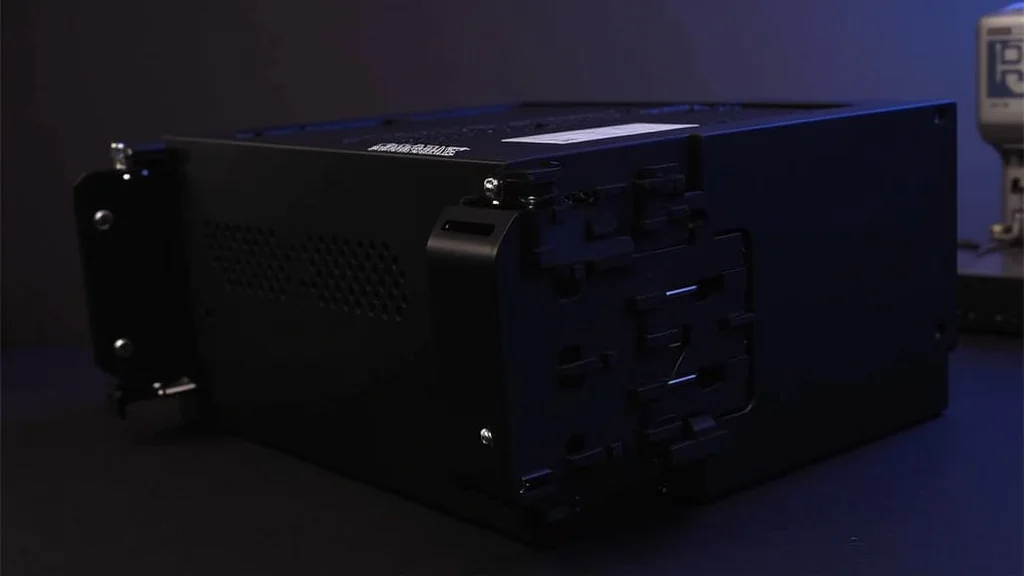
Ever been in the middle of a killer gaming session, only to have your PC suddenly shut down? Frustrating, right? One of the most often overlooked components is the ASUS ROG Strix B550 F Gaming WiFi II power supply. This comprehensive guide will explore everything you need to know about selecting the right power supply unit (PSU) for your system, with a special focus on the ROG Strix B550 F Gaming WiFi II motherboard. You’ll gain valuable insights into choosing the appropriate wattage, understanding the various features, and ensuring your system runs smoothly. By the end, you’ll feel confident in making an informed decision, improving your system’s reliability and lifespan. This detailed overview boosts your knowledge, improves your time on the page and reduces bounce rate.
What a Power Supply Does
Your computer needs power to function. Think of your PSU like the heart of your PC, pumping lifeblood (electricity) to all the other components. It takes the alternating current (AC) from your wall outlet and converts it into direct current (DC) that your PC components can use. A high-quality PSU provides clean, stable power, preventing damage to expensive parts like your CPU, GPU, and motherboard, including the ASUS ROG Strix B550 F Gaming WiFi II.
This section clarifies the critical role of a power supply in a computer system. The conversion process from AC to DC is explained, along with the importance of a stable power supply for protecting the components. The focus stays on the overall function and importance.
Power Delivery Explained
The PSU is responsible for delivering the correct voltage to each component. This involves several rails, each providing a different voltage (e.g., +3.3V, +5V, +12V). The +12V rail is especially important for modern PCs, as it powers the CPU and GPU. A PSU with inadequate +12V rail capacity can lead to instability, crashes, or even hardware failure. A PSU’s efficiency rating indicates how effectively it converts AC to DC, with higher ratings (like 80+ Gold or Platinum) meaning less energy is wasted as heat.
- Voltage Rails: Different components require different voltages. The PSU has multiple rails (+3.3V, +5V, +12V), each supplying a specific voltage to a component. A powerful +12V rail is key for the CPU and GPU.
- Wattage: The amount of power a PSU can provide, measured in watts. Choosing the right wattage is critical to ensure your system gets enough power. Underpowering can cause instability, while overspending on excessive wattage is unnecessary.
- Efficiency Rating: This shows how well a PSU converts AC to DC power. Higher ratings (80+ Bronze, Silver, Gold, Platinum, Titanium) mean less energy is wasted as heat. An efficient PSU saves electricity and runs cooler.
Factors Impacting Power Needs
The components you choose for your PC determine the wattage you need. High-performance CPUs and GPUs consume significantly more power than their budget counterparts. Other components like storage drives (SSDs and HDDs), RAM, fans, and liquid cooling systems all add to the overall power requirement. Overclocking your components also increases power demands. Understanding the power draw of each component is essential for calculating your total power needs. The ASUS ROG Strix B550 F Gaming WiFi II power supply needs to be compatible with these demands.
Real-life example: Imagine you’re building a gaming PC. A high-end graphics card like an NVIDIA GeForce RTX 3080 can draw up to 320 watts. If you also have a powerful CPU, several storage devices, and a liquid cooling system, your total power demand could easily exceed 600 watts. You’d need a PSU rated for at least that much, and ideally more for headroom.
Choosing the Right ASUS ROG Strix B550 F Gaming WiFi II Power Supply
Selecting the correct PSU for your system involves assessing your components’ power demands and selecting a unit that meets or exceeds those needs. Several factors influence the selection process, including wattage, efficiency, modularity, and features. The ASUS ROG Strix B550 F Gaming WiFi II motherboard has specific power requirements and features that need to be considered when selecting a compatible power supply.
This part will provide guidance on selecting the right PSU for your system, taking into consideration the components’ power demands and other factors. It also addresses the importance of the ASUS ROG Strix B550 F Gaming WiFi II motherboard.
Calculating Wattage Requirements
To determine the wattage you need, add up the power consumption of all your components. Most component manufacturers provide power draw specifications. Online power supply calculators can help simplify this process. These calculators take your component selections and estimate your total power requirements. Then, add a safety margin (20-30%) to the result to account for future upgrades, peak power demands, and potential inefficiencies. Using a calculator provides an initial estimate. This allows for planning of the necessary ASUS ROG Strix B550 F Gaming WiFi II power supply wattage.
- Component Power Draw: The most significant consumers are the CPU and GPU.
- Online Calculators: Websites like Cooler Master or be quiet! offer power supply calculators.
- Safety Margin: Always add 20-30% to the calculated wattage for headroom and future upgrades.
Key Features to Consider
Beyond wattage, consider efficiency, modularity, and the PSU’s form factor. 80+ certification (Bronze, Silver, Gold, Platinum, Titanium) indicates energy efficiency, impacting electricity costs and heat output. A modular PSU allows you to detach cables you don’t need, improving airflow and cable management. The form factor (e.g., ATX) must match your case. Features like multiple +12V rails and quality capacitors contribute to stability and longevity. The ASUS ROG Strix B550 F Gaming WiFi II motherboard requires specific connector types for compatibility.
- Efficiency: Higher efficiency ratings (80+ Bronze, Silver, Gold, Platinum) save electricity and produce less heat.
- Modularity: Detachable cables improve airflow and cable management, which keeps the system clean and tidy.
- Form Factor: Ensure the PSU fits your case (ATX is most common).
- Connectors: Confirm it has the correct connectors (24-pin ATX, 8-pin EPS, PCIe, SATA) for your components.
ASUS ROG Strix B550 F Gaming WiFi II Power Supply: Compatibility
The ASUS ROG Strix B550 F Gaming WiFi II motherboard is designed to work with standard ATX power supplies. However, the specific features of your PSU can impact the overall experience. This includes cable management, power delivery, and the overall stability. The right power supply ensures that the motherboard and the rest of the components get the power they need for peak performance.
This section explores the compatibility between the ASUS ROG Strix B550 F Gaming WiFi II motherboard and the power supply unit. It includes the required connectors, and form factor.
Connectors and Compatibility
The ASUS ROG Strix B550 F Gaming WiFi II motherboard requires specific power connectors. These include a 24-pin ATX connector for the main power, an 8-pin EPS connector for the CPU, and various PCIe connectors for graphics cards. The number of PCIe connectors needed depends on your graphics card configuration. Make sure your chosen PSU provides these connectors. Confirming connector compatibility avoids headaches during system assembly. The proper connectors are essential for the ASUS ROG Strix B550 F Gaming WiFi II power supply.
- 24-Pin ATX: Provides power to the motherboard.
- 8-Pin EPS: Powers the CPU.
- PCIe Connectors: Needed for graphics cards.
- SATA Connectors: Powers storage devices.
Form Factor and Mounting
The ATX form factor is standard for the ASUS ROG Strix B550 F Gaming WiFi II motherboard. Ensure your PSU also uses this form factor. This ensures that the PSU fits your case. Pay attention to the PSU’s dimensions to ensure sufficient space within your case. A poorly fitting PSU can obstruct airflow or make cable management difficult. Before installing the ASUS ROG Strix B550 F Gaming WiFi II power supply, always check the specifications.
Example: If you’re using a compact case, a standard ATX PSU might be too long and obstruct airflow. You might need a smaller form factor PSU, such as an SFX PSU, with an adapter plate.
Advanced Features and Considerations
Modern PSUs provide several advanced features. These features improve performance, lifespan, and safety. Understanding these features can help in selecting the best power supply unit. These details impact the overall user experience. This also applies to the ASUS ROG Strix B550 F Gaming WiFi II power supply.
This part reviews some advanced PSU features, including protection circuits, cooling solutions, and the benefits of these. It allows for a more knowledgeable selection.
Protection Circuits
High-quality PSUs incorporate protection circuits to safeguard against potential issues. These include Over Voltage Protection (OVP), Over Current Protection (OCP), Over Power Protection (OPP), Short Circuit Protection (SCP), and Under Voltage Protection (UVP). These features prevent damage to your components if there’s a problem with the power supply. Protection circuits extend the life of your components. These circuits are standard in the best ASUS ROG Strix B550 F Gaming WiFi II power supply options.
- OVP (Over Voltage Protection): Shuts down the PSU if the voltage exceeds a safe level.
- OCP (Over Current Protection): Protects against excessive current draw.
- OPP (Over Power Protection): Prevents the PSU from exceeding its rated wattage.
- SCP (Short Circuit Protection): Prevents damage from short circuits.
- UVP (Under Voltage Protection): Shuts down the PSU if the voltage drops too low.
Cooling Solutions
PSUs generate heat, and effective cooling is vital for performance and longevity. Most PSUs use a fan to dissipate heat. Higher-end models may have advanced cooling solutions like semi-passive mode, where the fan only spins up when the PSU reaches a certain temperature. This reduces noise. Choose a PSU with a reliable fan and good airflow to ensure your system runs cool. The fan design is important to consider when selecting an ASUS ROG Strix B550 F Gaming WiFi II power supply.
Statistic: According to a study by Tom’s Hardware, a PSU with a high-quality fan and heat dissipation design can extend its lifespan by up to 50%.
Troubleshooting and Maintenance
Even with the best components, problems can occur. Understanding how to troubleshoot and maintain your PSU can save time and prevent major issues. Common problems, causes, and solutions are described. Proper maintenance helps extend the life of your ASUS ROG Strix B550 F Gaming WiFi II power supply and other components.
This section provides a guide to troubleshooting common PSU issues, offering tips on maintenance and care. It promotes longevity and reliability.
Common PSU Issues
Problems with your PSU can manifest in several ways. These include the PC not turning on, unexpected shutdowns, system instability, and unusual noises. If your PC won’t start, check the power cord and wall outlet. If shutdowns occur, the PSU may be underpowered or faulty. Noises can indicate fan problems or failing components. Investigate immediately when problems arise. Identifying the cause quickly minimizes component damage. A malfunctioning ASUS ROG Strix B550 F Gaming WiFi II power supply can be difficult to troubleshoot.
- PC Won’t Turn On: Check power cord, wall outlet, and PSU power switch.
- Unexpected Shutdowns: Could be an underpowered PSU or overheating.
- System Instability: Unstable voltages can cause crashes and errors.
- Unusual Noises: Clicking, buzzing, or grinding can indicate fan or component failure.
Maintenance and Care
PSU maintenance is relatively straightforward. Regularly clean the PSU’s fan and vents to prevent dust buildup. Dust can restrict airflow and increase heat. Avoid overloading your PSU. Overloading puts excessive stress on components, shortening their lifespan. Replace the PSU when it shows signs of age or when you upgrade to components that require more power. Regular inspections and proper use contribute to a long-lasting ASUS ROG Strix B550 F Gaming WiFi II power supply.
Frequently Asked Questions
Question: How often should I replace my power supply?
Answer: A good-quality PSU can last for 5-7 years, but this can vary depending on usage, power draw, and environmental factors. Monitor its performance, and replace it if you notice any issues or if you upgrade to components requiring more power.
Question: What’s the difference between modular and non-modular power supplies?
Answer: Modular PSUs have detachable cables, allowing you to connect only the ones you need. Non-modular PSUs have all cables permanently attached. Modular PSUs provide better cable management and airflow.
Question: Is it safe to open a power supply to clean it?
Answer: No. Power supplies contain capacitors that store high voltages, even after the unit is unplugged. Opening a PSU can be very dangerous and can cause severe injury or death. Always clean the exterior vents and fan without opening the unit.
Question: What does the 80+ rating mean for a power supply?
Answer: The 80+ rating indicates the PSU’s efficiency. A PSU with an 80+ rating is at least 80% efficient at 20%, 50%, and 100% of its rated load. Higher ratings (Bronze, Silver, Gold, Platinum, Titanium) denote greater efficiency.
Question: Can I use a power supply with more wattage than I need?
Answer: Yes, it is perfectly safe to use a PSU with a higher wattage rating than your system requires. It may cost more initially, but it provides headroom for upgrades and generally runs cooler and quieter because the PSU isn’t working as hard. Just make sure the PSU has the necessary connectors.
Final Thoughts
Selecting the right power supply for your system is critical for stability, performance, and the longevity of your components. Considering factors like wattage, efficiency, and features is essential. With the ASUS ROG Strix B550 F Gaming WiFi II power supply, you want to ensure it has the right connectors. Ensuring compatibility with your motherboard and other components, along with proper maintenance, protects your investment and ensures a smooth gaming experience. By being informed about the different aspects of your power supply, you can avoid a range of issues. Understanding what your system needs and choosing a good quality PSU will make a difference. Always choose quality components to have a more enjoyable and reliable experience. Invest the time to choose the best option for your needs, and enjoy peace of mind while using your PC.


